





A journey through the sacred Seven Hills of Tirumala
Where the Hills Meet the Divine
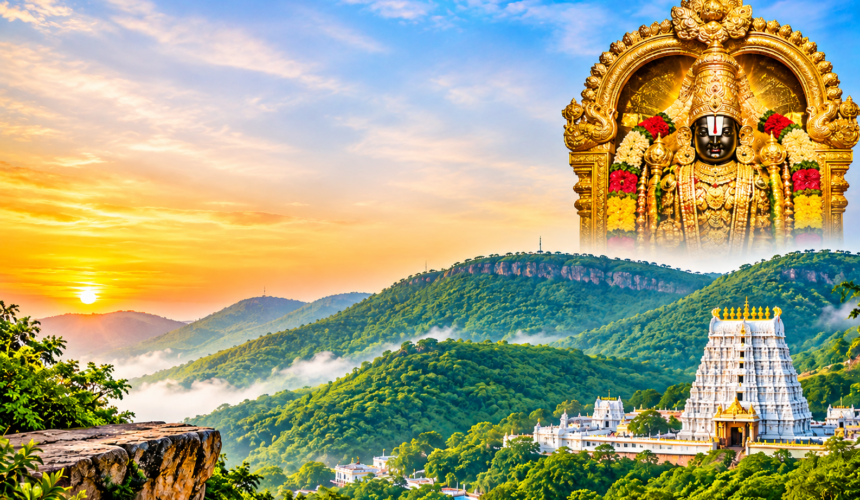
Rising majestically above Tirupati in Andhra Pradesh, the Tirumala Hills are much more than a spectacular mountain landscape. They form one of India’s most revered pilgrimage destinations and are traditionally known as Saptagiri, meaning the Seven Hills.
The hills are part of the Seshachalam range of the Eastern Ghats, and the sacred Sri Venkateswara Temple stands on the seventh hill, Venkatadri. For millions of devotees, the journey through these hills is itself a spiritual experience. The familiar chant, “Yedu Kondalavada, Venkataramana, Govinda!” meaning “Lord of the Seven Hills, Venkataramana, Govinda,” reflects the deep relationship between the deity and the sacred landscape.
Why Are They Called the Seven Hills?
The seven peaks surrounding Tirumala are traditionally identified as Vrishabhadri, Anjanadri, Neeladri, Garudadri, Seshadri, Narayanadri and Venkatadri.
Another important tradition connects the seven hills with the seven hoods of Adisesha, the divine serpent associated with Lord Vishnu. This is one reason Tirumala is also called Seshachalam.
1. Vrishabhadri – The Hill of Vrishabhasura
The first of the traditionally named hills is Vrishabhadri, associated with the legend of Vrishabhasura. According to traditional accounts, Vrishabhasura performed severe penance and eventually became associated with the sacred hill after his encounter with the divine.
The story represents one of the recurring themes in Tirumala’s sacred geography: the hills themselves carry stories of devotion, penance and divine intervention.
2. Anjanadri – The Hill Associated with Hanuman
Anjanadri is traditionally associated with Anjana Devi, the mother of Lord Hanuman. According to Tirumala tradition, Anjana Devi performed penance in the Tirumala region seeking a child. Her devotion is connected with the birth of Hanuman, one of the most revered figures in Hindu tradition.
The name therefore carries powerful associations with devotion, strength, service and unwavering faith.
3. Neeladri – The Blue Hill
Neeladri is one of the sacred peaks forming the Tirumala landscape. The name Neela is traditionally associated with the colour blue.
Like the other hills, Neeladri has acquired a distinct identity through centuries of religious tradition, literature and oral storytelling. Together, the seven hills form the sacred setting in which Lord Venkateswara is worshipped as the Lord of the Seven Hills.
4. Garudadri – The Hill of Garuda
Garudadri, also called Garudachala, is associated with Garuda, the divine vehicle and devoted servant of Lord Vishnu.
Garuda occupies a special position in Vaishnavite tradition and represents devotion, strength and complete surrender to the divine. The name Garudadri therefore connects the Tirumala landscape with the wider traditions surrounding Lord Vishnu and his earthly manifestation as Lord Venkateswara.
5. Seshadri – The Hill of Adisesha
Seshadri, or Seshachala, is one of the most significant names associated with Tirumala. The name refers to Adisesha, the divine serpent upon whom Lord Vishnu is traditionally depicted reclining.
According to sacred tradition, the seven hills themselves represent the hoods of Adisesha. This belief gives the entire mountain range its distinctive spiritual identity and explains the widespread name Seshachalam Hills.
6. Narayanadri – The Hill of Lord Narayana
Narayanadri derives its name from Narayana, one of the principal names of Lord Vishnu.
Since Lord Venkateswara is worshipped as a manifestation of Lord Vishnu, Narayanadri forms an important link between the hills and the Vaishnavite tradition. The hill represents the enduring connection between Narayana, Vishnu and Venkateswara in the sacred traditions of Tirumala.
7. Venkatadri – The Abode of Lord Venkateswara
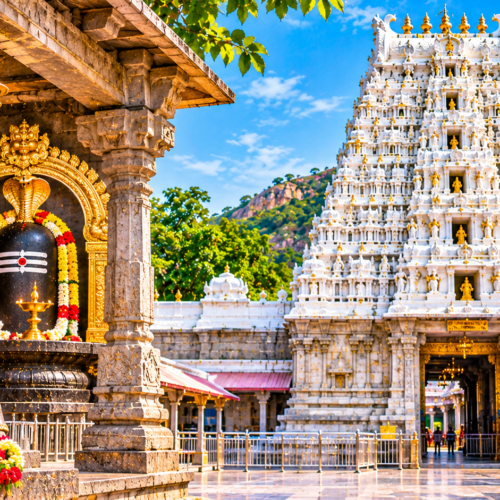
The seventh and most celebrated hill is Venkatadri, also known as Venkatachala. This is where the Sri Venkateswara Temple stands.
According to Tirumala tradition, the deity receives the name Venkateswara – Lord of Venkata Hill – from his presence on this sacred peak. For devotees, reaching Venkatadri is not simply reaching a temple; it represents arriving at the abode of Sri Venkateswara.
The Mythological Origin of the Seven Hills
One of the most popular traditions explains the Seven Hills through Adisesha. Adisesha is the divine serpent associated with Lord Vishnu. In Hindu tradition, Vishnu rests upon Adisesha in Vaikuntha.
According to the Tirumala tradition, the hills are regarded as the earthly manifestation of Adisesha, with the seven peaks representing his seven hoods. This sacred association gives Tirumala its names Seshadri and Seshachalam.
There are also several different legends in Puranic and regional traditions concerning the origin and sanctity of Tirumala. These should be understood as religious and traditional accounts rather than geological explanations.
The Geological Story Behind the Hills
The spiritual story of Tirumala is complemented by an extraordinary geological history. The Tirumala Hills form part of the Eastern Ghats, and the Seshachalam landscape contains remarkable geological formations.
One of the most significant is the Eparchaean Unconformity, a geological boundary representing an immense gap in Earth’s geological record.
Another spectacular natural formation is Silathoranam, a natural rock arch near the Tirumala temple. The arch is approximately 8 metres wide and 3 metres high and is formed in quartzite rock. These geological features add another dimension to the heritage of the Tirumala landscape.
Tirumala’s Seven Hills at a Glance
The seven sacred hills and their traditional associations are:
Vrishabhadri: Associated with Vrishabhasura.
Anjanadri: Associated with Anjana Devi and Lord Hanuman.
Neeladri: Associated with sacred Tirumala tradition.
Garudadri: Associated with Garuda.
Seshadri: Associated with Adisesha.
Narayanadri: Associated with Lord Narayana.
Venkatadri: Associated with Lord Venkateswara.
Why Tirumala Is Called the Land of Seven Hills
The identity of Tirumala is inseparable from its hills. The Sri Venkateswara Temple does not simply sit beside a mountain range; it is located on the seventh sacred hill, Venkatadri.
The hills, forests, temples, streams, viewpoints and ancient pathways together create an experience in which nature and spirituality exist side by side. For pilgrims and visitors, Tirumala offers a unique connection between natural beauty, ancient traditions and deep-rooted faith.
Seven Hills, One Timeless Legacy
The story of Tirumala is ultimately a story of faith, nature and heritage. From Vrishabhadri, associated with ancient legends, to Anjanadri, connected with Hanuman; from Seshadri, representing Adisesha, to Venkatadri, the sacred abode of Lord Venkateswara – each hill contributes another chapter to the identity of Tirumala.
Beyond mythology, the hills themselves tell an even older story through their ancient rocks, forests and extraordinary geological formations.
Seven hills. Countless legends. Thousands of years of devotion. One eternal spiritual destination.
A Connection to Ananda Vihara
For a destination positioned close to Tirupati, this heritage creates a powerful sense of place. Ananda Vihara can be positioned not simply as a stay or retreat near Tirupati, but as a place from which visitors can experience the culture, spirituality, nature and timeless legacy surrounding the Seven Hills of Tirumala.
Whether visitors come to seek spiritual blessings, explore the region’s natural beauty or experience its rich cultural heritage, the surroundings of Tirumala offer an unforgettable journey.
Ananda Vihara provides an opportunity to connect with the peaceful atmosphere and cultural significance of this remarkable destination.
Suggested Sources for Editorial Verification
Tirumala Tirupati Devasthanams (TTD) – Official Tirumala information and publications.
Government of Andhra Pradesh – Tirupati/Chittoor district heritage information.
UNESCO World Heritage Centre – Tentative List documentation for Tirumala.