





Introduction: The Powerful Abode of Lord Shiva
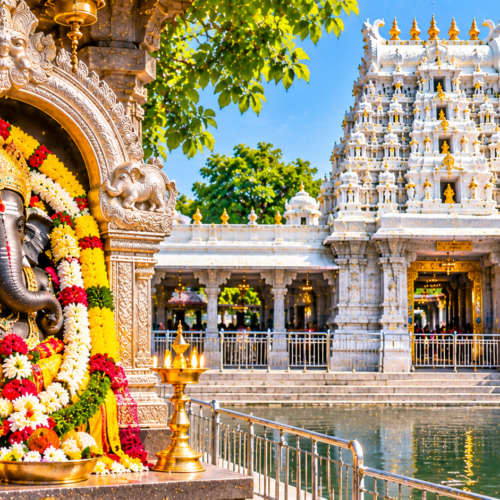
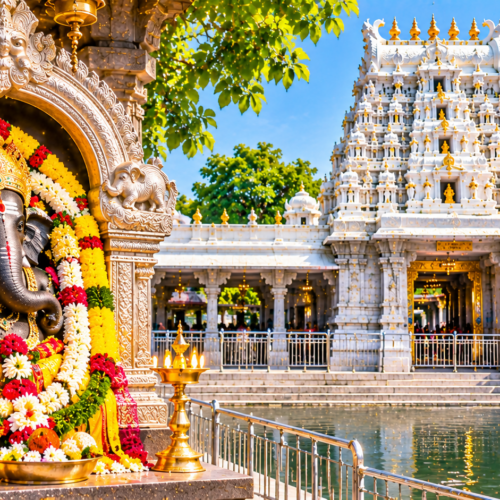
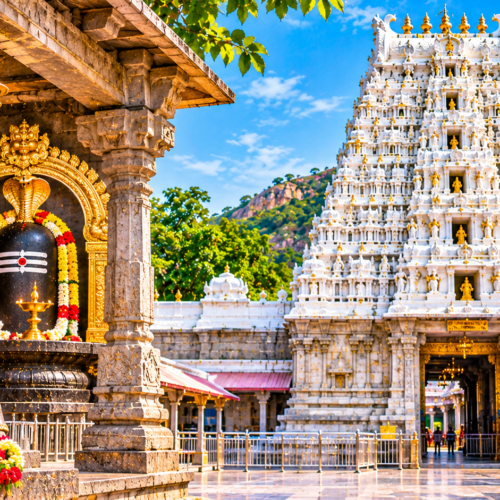
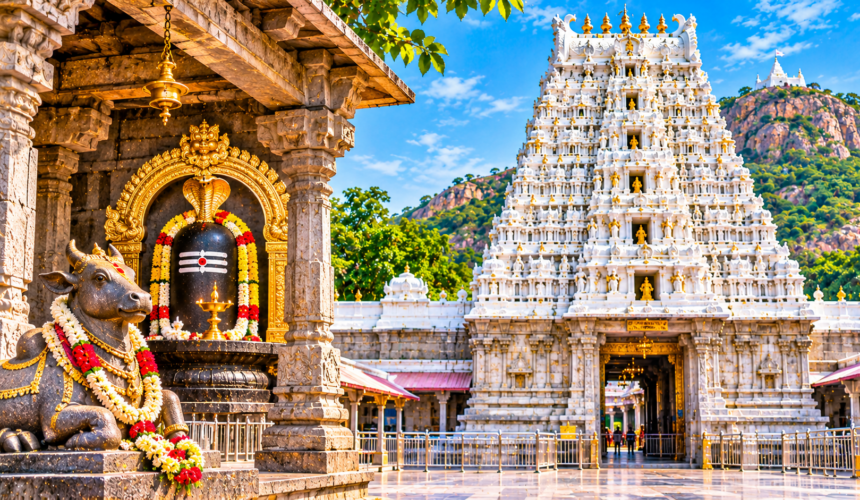
Located on the banks of the Swarnamukhi River in Andhra Pradesh, Sri Kalahasti Temple is one of South India’s revered Shiva temples. It is dedicated to Lord Shiva as Sri Kalahasteeswara Swamy, with Goddess Parvathi worshipped as Gnana Prasunambika Devi. The temple is famous for the Vayu Lingam, representing the element of air.
The Importance of the Pancha Bhoota Sthalams
Hindu philosophy describes five fundamental elements: Prithvi (earth), Jala (water), Agni (fire), Vayu (air) and Akasha (space). These are represented by five sacred Shiva temples in South India. Sri Kalahasti represents Vayu. The other sites are Ekambareswarar Temple at Kanchipuram, Jambukeswarar Temple at Tiruchirappalli, Arunachaleswarar Temple at Tiruvannamalai and Thillai Nataraja Temple at Chidambaram. The Vayu Lingam represents the invisible yet essential force that sustains life.
The Legend Behind the Name
The name Sri Kalahasti is associated with three devotees. Sri, the spider, worshipped Shiva by creating a protective web around the Lingam. Kala, the serpent, offered precious gems. Hasti, the elephant, worshipped Shiva with water and flowers. Their forms of worship differed, but their devotion was equally sincere. The story teaches that sincere devotion is accepted regardless of the devotee’s form or background.
The Significance of Rahu Ketu Pooja
One of the temple’s best-known rituals is Rahu Ketu Sarpa Dosha Nivarana Pooja. In Hindu astrology, Rahu and Ketu are the lunar nodes and are associated with particular astrological influences. Many devotees visit to perform the ritual when they believe their horoscopes indicate related obstacles. The pooja is performed with prayers to Lord Shiva, seeking protection, peace and relief from perceived difficulties. These are religious and astrological beliefs, not scientifically established outcomes.
Architecture and History
Sri Kalahasti Temple is admired for its Dravidian architecture, towering gopuram, carved mandapams and sculptures. Its history is associated with the Pallava, Chola and Vijayanagara periods. Temple traditions and historical records associate major architectural contributions with rulers including Krishnadevaraya.
Why Visit and FAQs
Devotees visit to seek Lord Shiva’s blessings, perform Rahu Ketu pooja according to their beliefs, pray for family welfare and experience one of the Pancha Bhoota Sthalams.
What element does it represent?
Air or Vayu.
Why is Rahu Ketu pooja performed?
Devotees seek relief from astrological difficulties according to Hindu belief.
Which river is nearby?
The Swarnamukhi.
Conclusion
Sri Kalahasti represents the relationship between nature, faith and spirituality. Its Vayu Lingam, ancient legends and devotional traditions make it one of Andhra Pradesh’s most significant Shiva pilgrimage destinations.